My First ASIC Design
Here’s the story about how I ended up designing my first ASIC - Application Specific Integrated Circuit.
A few days ago, I saw a Hack Club Program named ASIC in which we were supposed to design an ASIC. Hack Club would then ship a FPGA Board for testing it and finally, it will be fabricated and shipped to the designer. It sounded quite interesting to me, specifically triggering my curiosity.
I began by reading and watching the tutorials suggested by Hack Club itself but ended up being overwhelmed. But instead of giving up or abandoning the idea, I myself went online to discover some guides. Firstly, I experimented with the VGA Playground, understanding the fundamentals and applying them to make different colored stripes and patterns.
Here’s the final pattern I made out of fun before moving on to my real project:
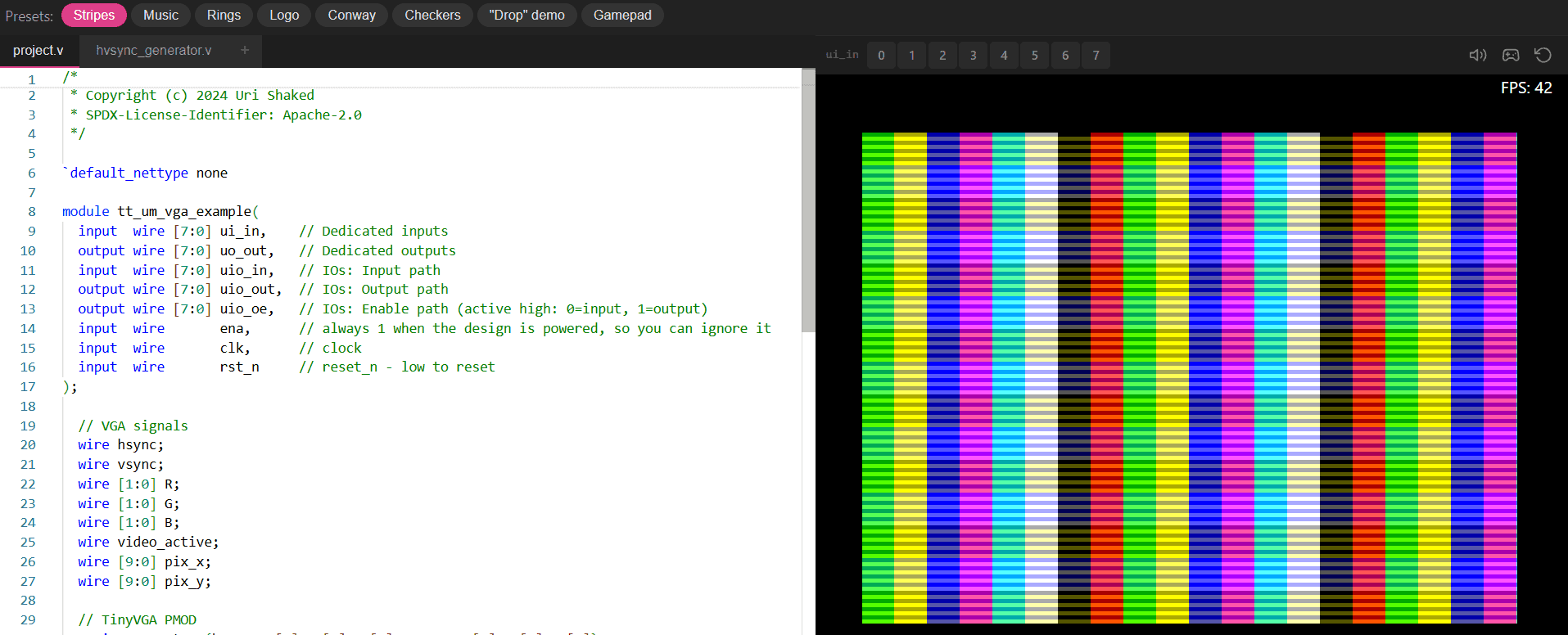
VGA Playground
There wasn’t a single master guide for this, so I ended up learning one thing from Site A and a second thing from Site B - to be clearer, I just wandered here and there until I found out what was necessary for me to start.
Cloning the Template Repository, I started my project. At first, I simply checked all files, got a rough idea of what each file did and how it worked. I started by planning what to do and how and then began coding - once I was into coding, I found it to be a smooth sail - perhaps, it was supposed to be since I did a lot of research earlier.
That’s the story of how I did it. Now let me elaborate on what I did and why.
Firstly, the project is a basic traffic light controller ASIC. Imagine a road intersection of two roads - one running East-West while the other North-South. The basic functionality of this ASIC is that when it gives a green signal for one side, the other stays red and vice versa.
Here’s the GDS Render:
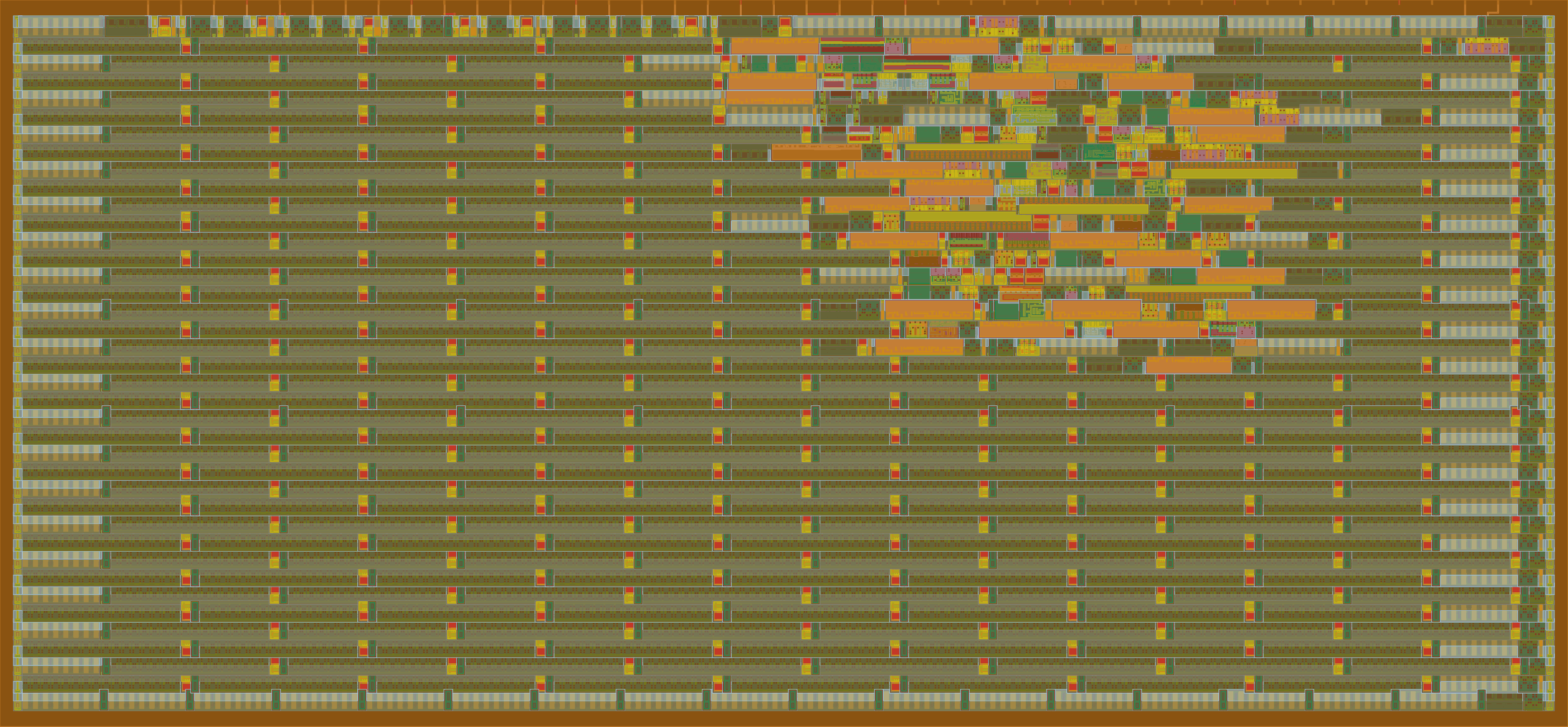
GDS Render
Here’s the GTKWave Display:
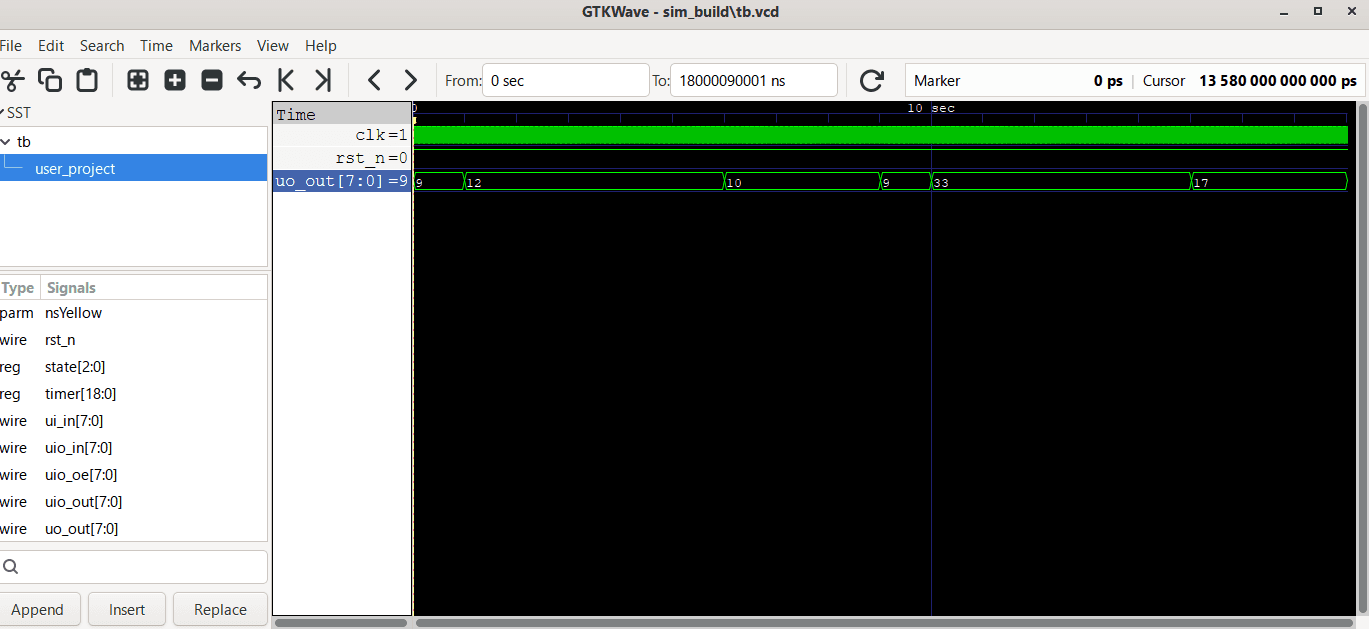
GTKWave Display
Now let’s discuss its technical perspective. I used Verilog for the coding, GTKWave for wave file display and Cocotb for testing and ensuring everything works perfectly. The clock frequency is 100,000 Hz, meaning 100,000 clock periods equal 1 second. The Green Signal stays up for 5 seconds, the Yellow Signal for 3 seconds. The Red Signal stays up for 1 second - during that time, both sides have Red Signal for safety.
Moving ahead, the state is stored in 3 bits, the timer is stored in 19 bits, while the lights variable is stored in 6 bits.
My project passed all of the GitHub Actions Workflows. Here’s the repository link: https://github.com/msafeerhassan/Traffic-Signal-Controller-ASIC.
Thanks for reading this until the end.